
Glossary of climbing terms is a phrase that marks the starting point for anyone stepping into the sport of climbing. Before you tie into a rope, chalk your hands, or step onto a wall, understanding the language climbers use helps you stay safe, communicate well, and enjoy the movement. This article provides clear explanations of common terminology so you can walk into any climbing gym or crag feeling confident instead of confused. It also helps you decode climbing books, gear reviews, and instructor tips in a way that keeps your learning curve smooth instead of frustrating.
Climbing is filled with tradition, creativity, and technical knowledge, so a glossary of climbing terms becomes more than a list of words. It’s a map that reveals how climbers think, how safety systems work, and what you need to say in the right moment. Every climber, from absolute beginner to seasoned expert, benefits from sharpening their vocabulary to stay aligned with partners, coaches, and guides. Once these foundational ideas become familiar, you’ll have the tools to learn more advanced concepts and enjoy climbing for the long term.
1 – Belay
Belay is the act of managing the rope to protect a climber from falling, and a glossary of climbing terms would be incomplete without it. The belayer controls rope slack, catches falls, and communicates closely with the climber.
Good belaying requires attention, proper technique, and trust. It is a fundamental safety skill that every climber must learn before moving on to more complex climbs.
2 – Lead Climbing
Lead climbing involves ascending a route while clipping the rope into fixed protection as you go. The phrase glossary of climbing terms matters here because knowing these words makes rope communication clear.
Leaders must manage their own safety with good clipping technique while remaining focused on route decisions and efficient movement to reduce unnecessary risks.
3 – Bouldering
Bouldering refers to climbing short, unroped routes—called problems—typically protected by crash pads. In a gym or outdoors, the glossary of climbing terms helps identify grading systems and movement styles.
This discipline encourages powerful movement and problem-solving while minimizing rope systems, making it a favorite for beginners and experienced climbers alike.
4 – Top Rope
Top rope climbing means the rope is already anchored above the climber, ensuring shorter, safer falls. You’ll often hear this in a glossary of climbing terms when learning gym basics.
It is an ideal introduction for new climbers because the belayer has more control, enabling improved confidence while learning technique.
5 – Route
A route is a predefined line of holds or rock features that climbers follow to the top. Knowing this term from any glossary of climbing terms improves communication with belayers and gym staff.
Routes may focus on endurance, technique, balance, or power, and they often include specific crux sections where the hardest movements occur.
6 – Problem
A problem is the bouldering version of a route—short, powerful, and mentally engaging. Climbers reading a glossary of climbing terms will understand why these are called problems: they demand solving.
The challenge is not only physical but also mental as you learn how to sequence moves efficiently to avoid wasting energy.
7 – Crux
The crux is the most difficult move or sequence on a climb, and a glossary of climbing terms highlights its universal relevance to routes and problems.
Finding a smart strategy for the crux is essential to success, especially when fatigue sets in before reaching it.
8 – Chalk
Chalk refers to magnesium carbonate used to keep hands dry and improve grip. Including this in a glossary of climbing terms helps beginners manage slippery holds.
Climbers must use chalk responsibly to reduce environmental impact and maintain good etiquette indoors and outdoors.
9 – Holds
Holds are the shapes climbers grasp or step on along a route. When reading a glossary of climbing terms, you’ll see many hold types like jugs, slopers, and crimps.
Different shapes teach you new movement patterns and require skillful body positioning instead of simply pulling harder.
10 – Jug
A jug is a large, easy-to-grab hold that offers secure gripping, making it a popular term found in any glossary of climbing terms.
Jugs allow beginners to feel confident while experts use them to rest during harder climbs.
11 – Crimp
A crimp is a small edge that only accommodates fingertips, and a glossary of climbing terms prepares you to recognize and respect it. Training fingers gradually is important.
Over-gripping can cause injury, so using good technique and warming up properly helps protect your hand health.
12 – Sloper
Slopers are rounded holds with no obvious edges, requiring friction, body tension, and balance. The glossary of climbing terms explains why these holds force subtle movement.
Learning to trust body positioning rather than hand strength helps you master slopers and improve your overall climbing style.
13 – Flash
To flash a route means completing it on the first try with prior information. A glossary of climbing terms clarifies how this differs from onsight.
Skillful observation and strategic communication allow you to flash more climbs even if you haven’t rehearsed them.
14 – Onsight
An onsight is also a first-attempt success, but with no prior knowledge. This term appears frequently in a glossary of climbing terms and represents technical mastery and adaptability.
It requires reading the route from the ground and making perfect choices in the moment.
15 – Beta
Beta is verbal or visual advice about how to climb a route. The glossary of climbing terms points out that beta can make a climb more efficient.
Some climbers prefer figuring out moves on their own, while others enjoy shared strategies for faster progress.
16 – Pitch
A pitch is a section of a long climb between two belay stations, and glossary of climbing terms entries often emphasize its role in multipitch systems.
Multi-pitch adventures demand strong teamwork, communication, and the ability to build safe anchors.
17 – Anchor
An anchor secures the rope at the top of a pitch or route. The glossary of climbing terms reminds climbers that anchors are essential for safety in many styles of climbing.
Anchors must be constructed carefully using solid gear placement, redundancy, and correct load direction.
18 – Harness
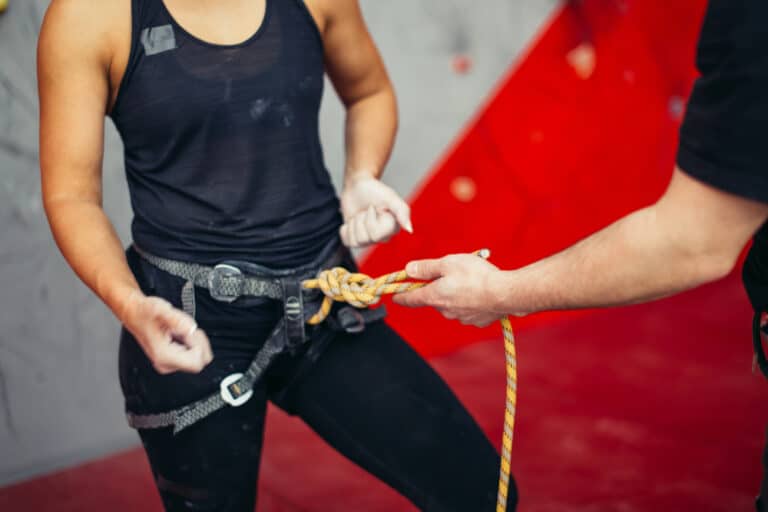
A harness is a belt-like safety device that connects climbers to the rope system. Beginners consulting a glossary of climbing terms quickly learn to wear it correctly.
Comfort, proper fit, and regular inspection are essential for safe climbing experiences.
19 – Carabiner
Carabiners are metal connectors used to link parts of the safety system. A glossary of climbing terms explains locking and non-locking varieties used for protection.
Each carabiner must be oriented correctly to prevent cross-loading and accidental openings.
20 – Quickdraw
Quickdraws connect the rope to protection points for lead climbing, and the glossary of climbing terms helps beginners understand safe clipping.
Clipping efficiently and correctly can prevent rope drag and reduce fall risk.
21 – Dynamic Rope
Dynamic ropes are designed to stretch and absorb the energy of a fall. You’ll find this defined in the glossary of climbing terms because rope choice affects both comfort and protection.
Learning proper storage and replacement timelines increases your rope’s lifespan and reliability.
22 – Crash Pad
A crash pad cushions falls during bouldering. When browsing a glossary of climbing terms, you’ll see why pad placement is a skill that spotters must develop.
Quality spotting and mindful pad setup reduce injury during highball or awkward boulder problems.
23 – Spotting
Spotting is guiding a falling climber toward a safe landing, and people learning from a glossary of climbing terms discover its importance in bouldering safety.
Good spotting uses protective hands, attentive positioning, and communication to help prevent injury during falls.
24 – Traverse
A traverse is movement sideways across a wall without gaining height. The glossary of climbing terms often highlights how this builds footwork and endurance.
Sideways moves demand precision, creativity, and efficient positioning to avoid tiring out quickly.
References
(Click to open)
American Alpine Club. “Climbing Safety Basics.” https://americanalpineclub.org
UIAA – International Climbing and Mountaineering Federation. “Equipment Standards.” https://theuiaa.org
Access Fund. “Responsible Climbing Practices.” https://www.accessfund.org